Introduction: Innovation Begins Where Knowledge Meets Application
In today’s competitive and sustainability-driven market, polymer compounding is no longer just about mixing materials—it’s about engineering performance, solving real-world challenges, and staying ahead of global trends. To achieve this, the industry must do more than invest in machines and materials. It must invest in research and development (R&D)—and more importantly, foster collaboration between academia and industry.
This partnership between research institutions and manufacturing enterprises has become a cornerstone of innovation in polymer science. In India, this collaborative spirit is beginning to reshape the landscape of compound and masterbatch manufacturing, setting new benchmarks in quality, sustainability, and technological leadership.
The Importance of R&D in Polymer Compounding
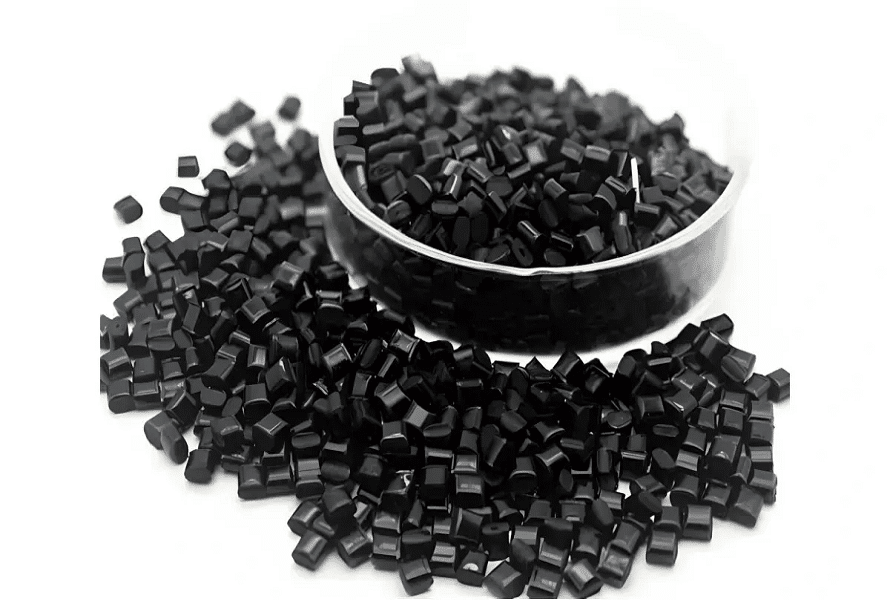
Polymer compounding is a precise science. It involves blending base polymers with additives, fillers, reinforcements, and colorants to create custom materials with targeted mechanical, thermal, optical, and chemical properties. As industries—from automotive to packaging—demand smarter, safer, and more sustainable materials, R&D plays a critical role in:
- Formulating advanced compounds for niche applications.
- Enhancing material performance while reducing weight and cost.
- Integrating bio-based or recycled content for greener solutions.
- Developing next-generation functional additives like anti-microbial, anti-static, or flame-retardant agents.
However, much of this innovation doesn’t happen on the factory floor—it begins in the lab.
Why Academia Matters
Universities and research institutes are hubs of theoretical knowledge, advanced testing infrastructure, and young scientific talent. While industry focuses on production efficiency and customer delivery, academia specializes in fundamental research, experimentation, and knowledge creation.
When brought together, academia and industry can:
- Accelerate the development of new materials.
- Reduce time-to-market for innovative products.
- Address critical challenges in processing and sustainability.
- Train the next generation of skilled polymer scientists and engineers.
This is particularly crucial in India, where the polymer compounding industry is rapidly scaling, and demand for R&D-led innovation is growing faster than ever.
The Current Gap—and the Bridge Being Built
Traditionally, India has seen a disconnect between academic research and industrial practice. Innovations developed in universities often struggled to find commercial application, while industries lacked access to cutting-edge research.
Today, this gap is beginning to close, thanks to:
- Joint research initiatives between companies and institutions like IITs, CIPET, and NIPER.
- Industry-funded academic projects focused on practical, application-driven goals.
- Internship and training programs that bring students into real manufacturing environments.
- Government incentives and schemes like the Atal Innovation Mission and DST-supported innovation hubs.
These collaborations are transforming theoretical ideas into commercial materials, improving product quality, and preparing a future-ready workforce.
Real-World Applications of Industry-Academia Collaboration
1. Developing Sustainable Materials
Research institutes are helping compounders develop bio-based alternatives to traditional polymers. Through detailed studies on natural fibers, agricultural waste, or algae-based biopolymers, they are creating materials that are both high-performing and environmentally friendly.
2. Enhancing Recycling Technology
Recycling plastics is one of the biggest challenges in the circular economy. With the help of academic research, Indian companies are now integrating compatibilizers and modifiers that allow for better blending of recycled and virgin materials without losing mechanical strength or appearance.
3. Smart and Functional Compounds
Whether it’s anti-viral coatings for medical applications or heat-dissipating compounds for electronics, collaborative research is leading to the creation of smart masterbatches that offer functionalities well beyond basic aesthetics.
The Role of CMMAI in Driving Collaboration
As a unified body representing India’s masterbatch and compounding industry, the Compound and Masterbatch Manufacturer Association of India (CMMAI) actively encourages and supports collaboration with academia.
CMMAI is working to:
- Facilitate partnerships between member companies and academic institutions.
- Organize conferences and seminars that bring researchers and manufacturers together.
- Support skill development initiatives to bridge the talent gap.
- Advocate for R&D-friendly policies and government funding in the polymer sector.
By playing a central role in this ecosystem, CMMAI is helping ensure that innovation is not limited to a few players, but becomes an industry-wide movement.
Challenges and Opportunities
While the potential is huge, some challenges still exist:
- Limited exposure to industrial needs in academic curriculums.
- Resource constraints for both academic labs and small-to-medium manufacturers.
- IP management issues between collaborating parties.
- Slow technology transfer processes.
However, these challenges are being addressed through transparent agreements, government support, and the shared understanding that innovation benefits all.
A New Era for Polymer Science in India
As India positions itself as a global leader in polymer compounding and masterbatch manufacturing, the synergy between academia and industry will be essential.
This partnership will help the industry move beyond conventional practices and focus on:
- Sustainable solutions that align with global environmental goals.
- Smart, high-performance compounds tailored to advanced applications.
- Cost-effective formulations that retain quality and reduce imports.
- A skilled workforce ready for the future of materials science.
Conclusion: When Industry and Academia Walk Together, Innovation Leads the Way
The future of polymer compounding in India isn’t just about producing more—it’s about producing better, smarter, and greener materials. By embracing the strengths of both industry and academia, we unlock the true potential of R&D: faster innovation, stronger global competitiveness, and a more sustainable tomorrow.
At CMMAI, we believe in the power of partnerships over silos, and collaboration over competition. Together, let’s bridge the gap, spark innovation, and shape the future of our industry.