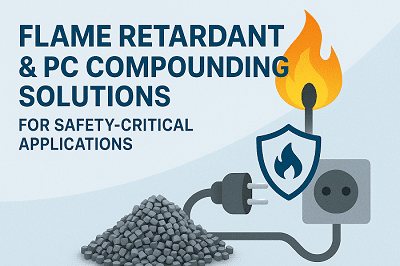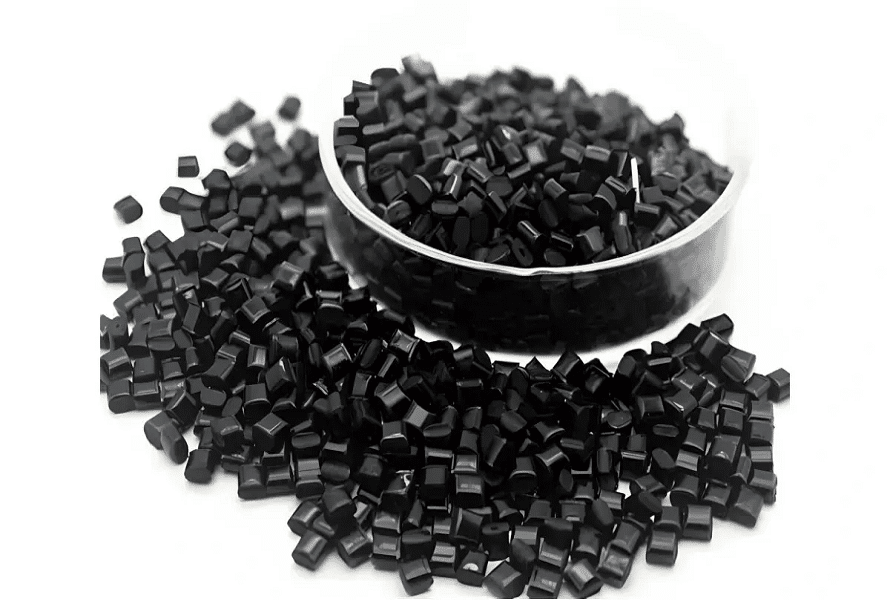
Safety is non-negotiable and choosing the right materials can make all the difference between protection and catastrophe. The flame-retardant polycarbonate compounds are the golden standard for industries where fire safety, durability and performance coexist without any compromise. These are advanced materials that are engineered to perform when it matters the most be it electrical enclosures that protect vital infrastructure or automotive components that safeguard passengers.
What Are Flame Retardant Plastic Compounds?
The flame-retardant plastic compounds are those that are specialised polymers formulated with additives that significantly reduce their flammability and slow down the spread of fire. These are unlike the regular standard plastics that can ignite quickly and fuel flames, instead these compounds are designed to self-extinguish, resist ignition and minimise smoke generation during fire exposure. This is what makes these indispensable for applications where human safety and equipment protection becomes paramount.
How Flame Retardant Additives Work
The science behind the flame-retardants involves multiple mechanisms. They function by interrupting the combustion cycle at different stages. It could be by creating a protective char layer on the material’s surface, that acts as a thermal barrier that insulates the underlying polymer from heat, while others release fire-suppressing gases that dilute flammable vapours and reduce the oxygen availability. There are additives that work by cooling the combustion zone, effectively lowering the temperatures below the threshold that’s required for sustained burning. The result is a material that resists ignition and stops flame propagation, buying critical time during fire emergencies.
Halogenated vs Halogen-Free Options
There are two primary pathways in the flame-retardant industry: halogenated and halogen-free formulations. Halogenated variants that contain bromine or chlorine have historically dominated mainly due to their exceptional efficiency and cost-effectiveness. The growing environmental consciousness has accelerated the shift towards halogen-free alternatives. The new formulations utilise phosphorous-based, nitrogen-based or mineral additives to achieve comparable fire resistance without the environmental and toxicity concerns associated with the halogenated compounds. Finally, the choice between them mostly depends on regulatory requirements, application demands and sustainability priorities.
Understanding Flame Retardant PC (Polycarbonate) Compounds
Polycarbonate possesses inherent advantages as an engineering thermoplastic and when enhanced with flame retardant additives, it becomes an exceptionally versatile safety material that meets the demanding requirements of the modern industry.
Material Characteristics of PC
Polycarbonate is renowned for its clarity, approaching a glass-like transparency while offering a superior impact resistance. It’s natural toughness with excellent dimensional stability across temperature extremes, makes it a preferred choice for precision applications.
Polycarbonates maintain its mechanical properties across a wide temperature range and demonstrates excellent resistance to many chemicals, oils and greases. When these are compounded with flame retardant additives, these inherent properties are preserved while gaining critical fire resistance capabilities.
Why PC Is Ideal for Safety-Critical Applications
The very special combination of optical clarity, impact strength and the thermal stability positions flame retardant PC as the choice for safe and critical environments. It can withstand sudden mechanical stress without shattering and this property becomes crucial in protective equipment and safety barriers. The structural integrity is maintained even when it gets exposed to elevated temperatures thereby preventing catastrophic failures during thermal events. PC also has excellent electrical insulation properties that makes it invaluable for electrical and electronic applications where fire risk must be minimised without compromising performance.
Key Properties of Flame Retardant & PC Compounding Solutions
Understanding the technical advantages of FR PC compounds helps engineers and product designers make informed material selection decisions that directly impact product safety and longevity.
High Heat and Fire Resistance
The flame-retardant PC compounds demonstrate exceptional heat deflection temperatures, often exceeding 130°C, helping them maintain structural integrity in high temperature environments. It has self-extinguishing properties ensuring even in case ignition occurs, the flames are quickly suppressed. Flame retardant PC compounds typically achieve UL94 V-0 ratings, the highest classification for vertical burn testing.
Impact Strength and Durability
One of the most compelling attributes of FR PC compounds is their ability to absorb significant impact energy without fracturing. This toughness remains consistent across a broad temperature spectrum, from sub-zero conditions to elevated temperatures. The material resists cracking, stress whitening, and mechanical degradation even after repeated impacts, ensuring long-term reliability in demanding environments. This durability translates directly into extended product lifespans and reduced maintenance requirements.
Electrical Insulation Performance
Superior dielectric strength makes FR PC compounds essential for electrical applications. These materials effectively prevent current leakage and arc tracking, protecting both equipment and personnel from electrical hazards. Their insulation properties remain stable across varying humidity levels and temperatures, ensuring consistent performance in diverse operating conditions. The combination of flame retardancy and electrical insulation creates a comprehensive safety solution for electronic devices and power management systems.
Industrial Applications of Flame Retardant PC Compounds
The versatility of FR PC compounds has made them indispensable across multiple industries where safety cannot be compromised.
Electrical & Electronics (Switchgear, Enclosures, Connectors)
The FR PC compounds serve as the backbone of the electrical infrastructure. Circuit breakers, electrical enclosures all benefit from the material’s dual ability to insulate electrically and resist fire. The connectors and terminal blocks manufactured from these compounds prevents the electrical fires while also ensuring reliable connections. The material’s dimensional stability ensures precise fit and function even after years of thermal cycling.
Automotive Safety Components
The material’s impact resistance provides crucial protection in collision scenarios. Modern vehicles increasingly rely on FR PC compounds for interior and under-hood components. Dashboard elements, lighting assemblies and sensor housings require materials that won’t contribute to cabin fires. Battery enclosures for electric vehicles demand exceptional fire resistance to contain thermal runaway events.
Consumer Electronics & Home Appliances
The FR PC are used in many kitchen appliances and television bezels protecting consumers in their homes. Laptops, tablet cases, power tool housings and many small appliance components, all benefit from the material’s fire-resistant properties. The aesthetic versatility pf the PC allows for attractive finishes that meet both safety requirements and design expectations.
Building & Construction Materials
The material’s weatherability ensures outdoor performance while its fire resistance provides essential protection in commercial and residential buildings. The architectural applications increasingly specify FR PC compounds for lighting diffusers, electrical conduit systems and safety glazing applications.
Advantages of Choosing FR & PC Compounds for Safety-Critical Use
The decision to specify flame retardant PC compounds delivers multiple strategic advantages beyond basic safety compliance.
Compliance with UL94 and Other Safety Standards
The FR PC compounds consistently achieve top-tier ratings and facilitate regulatory approval across global markets, reducing time-to-market and certification costs. Comprehensive testing data supports confident specifications for even the most demanding applications.
Long-Term Reliability in Harsh Environments
The protective properties are well maintained by the FR PC compounds throughout the extended service lives, resisting degradation from UV exposure, temperature cycling and chemical contact. This highly reduces warranty claims and enhances the brand reputation through consistent product performance.
Cost-Effective High-Performance Solutions
The flame-retardant PC compounds often prove economical when total lifecycle costs are considered. Reduced failure rates, lower insurance premiums, enhanced safety margins and the extended product lifespan all contribute to a very favourable return on investment.
Need Reliable Flame Retardant & PC Compounds?
Get Custom Compounding Solutions Tailored to Your Industry Needs
Whether it is specific UL ratings that you need, custom colours or enhanced UV stability; working with an experienced compounding partner ensures your flame-retardant PC materials meet exact specifications. The right partner provides technical expertise, consistent quality and responsive support to transform your safety critical applications from concept to reality. Do not compromise on safety, choose flame-retardant PC compounds engineered for excellence. Visit cmmai.in today!