- What is Masterbatch?
- Types of Masterbatches: Understanding the Different Variants
- Masterbatch Manufacturing Process: How Masterbatches Are Made
- Advantages of Using Masterbatch in Plastic Processing
- Conclusion
What is Masterbatch?
One of the most important ingredients in today’s plastic production is the masterbatch. It is widely used to make colourful, durable and high-performance plastic products. The application of masterbatch is wide and used in almost every industry — be it for packaging film, an automobile part or a household container, the masterbatch ensures that the plastic is not just visually appealing but strong and long-lasting as well.
This article walks you through the details of this from sourcing raw materials to manufacturing final high-value products.
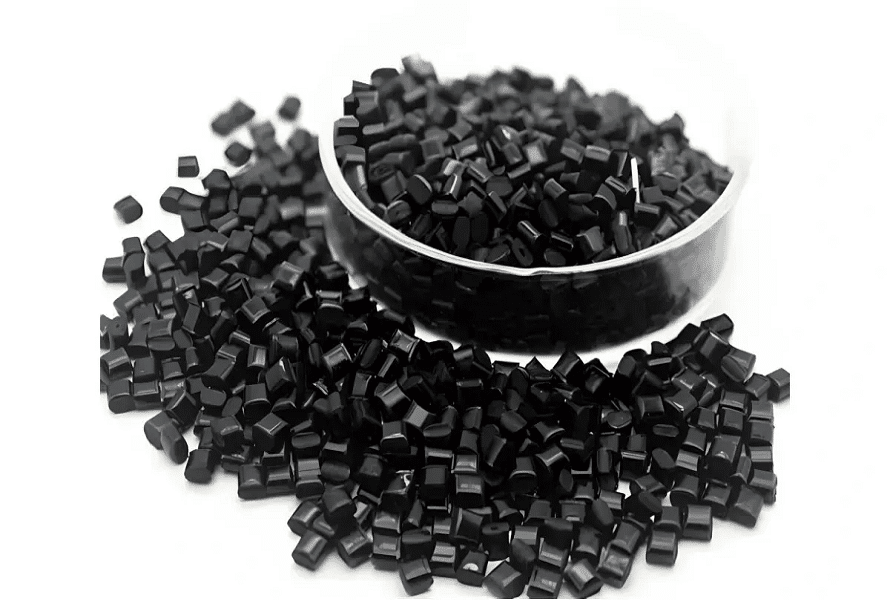
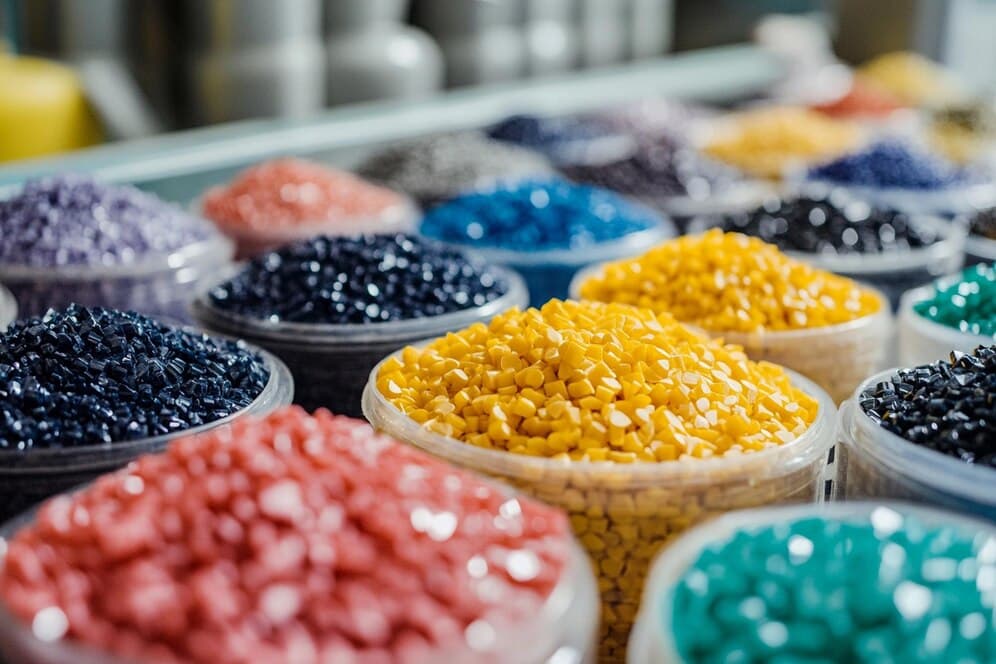
The masterbatch is a concentrated mixture of pigments and functional additives combined with a base plastic resin that is known as a carrier. It comes in pellet form and is added to raw polymers during processing to impart colour, strength, UV resistance, antimicrobial properties and a lot more. Therefore, using these masterbatches can help modify the colour, appearance and the performance of the plastic materials with ease without worrying about uneven dispersion.
Types of Masterbatches: Understanding the Different Variants
The masterbatches help improve performance and each type of masterbatch has distinct purposes. They play a vital role in plastic processing, allowing the manufacturers to enhance and modify the plastic materials for diverse functional and aesthetic needs.
Additive Masterbatch
What is Additive Masterbatch?
Additive masterbatch contains specific functional additives that are blended within a compatible carrier resin. These are carefully engineered to provide performance-enhancing properties to plastic materials during processing. The additive masterbatch is designed to elevate the mechanical strength, thermal stability and overall functionality of the plastics.
Benefits and Applications of Additive Masterbatch
Additive masterbatch formulations are widely applied across the industries like the automotive, packaging, medical and consumer goods, where durability, safety and reliability are essential.
- It improves UV stability, preventing degradation from the constant sunlight exposure.
- Increases the flame retardancy and enhances safety in sensitive applications
- Static charge is reduced to create anti-static surfaces
- It enhances the slip and anti-blocking properties, improving film performance
- Provide antimicrobial protection, ensuring hygiene and longer product life
These formulations are widely applied across industries such as automotive, packaging, medical, and consumer goods, where durability, safety, and reliability are essential.
Applications span across automotive parts, food packaging, agricultural films, medical devices, and consumer electronics. They ensure that plastic products meet durability, safety, and performance standards under various environmental conditions.
UV Masterbatch
What is UV Masterbatch and How Does it Work?
A UV masterbatch is a specialized formulation containing ultraviolet (UV) stabilizers and absorbers designed to protect plastic products from the damaging effects of sunlight. When plastics are exposed to UV radiation, they often suffer from discoloration, brittleness, surface cracking, and a decline in mechanical strength.
The UV masterbatch acts as a shield, it absorbs harmful UV rays and prevents them from reaching and breaking down the polymer chains. This helps maintain the appearance, flexibility, and durability of plastic products even after prolonged outdoor exposure.
Importance of UV Masterbatch in Outdoor Applications
UV masterbatches are vital for any plastic material used outdoors or exposed to sunlight for extended periods. By incorporating UV protection, manufacturers can ensure that products retain their colour, strength, and structural integrity over time.
- Agricultural films – to resist sunlight and maintain crop protection performance
- Garden furniture – to prevent fading and cracking from sun exposure
- Outdoor signage – to maintain color brightness and readability
- Automotive components – to enhance weather resistance and durability
In essence, UV masterbatches extend the lifespan and reliability of outdoor plastic products, making them a crucial element in industries where sunlight exposure is unavoidable.
Color Masterbatch
What is Color Masterbatch and How is it Used?
The colour masterbatch consists of concentrated blend of some high-quality pigments or dyes that is uniformly dispersed in a carrier resin. The major use of this is to give consistent colour to raw polymers during the processing. Unlike the traditional powdered pigments, colour masterbatch gives accurate dosing, a clean handling and a very superior dispersion, therefore ensuring uniform results in every batch.
If the manufacturers incorporate the colour masterbatch, they can achieve vibrant and stable shades across a wide range of plastic products that ranges from packaging films and containers to consumer goods, automotive interiors and the home appliances.
Different Color Masterbatch Options for Plastic Products
Colour masterbatches are flexible and that makes them indispensable in branding, product aesthetics and the market differentiation therefore allowing the manufacturers to combine creativity with functionality and bringing some life, identity and visual appeal to the plastic product. They can be:
- Custom-made shades tailored to match specific brand or product color requirements.
- Universal colors covering widely used tones such as black, white, red, and blue.
- Special-effect masterbatches that deliver unique finishes, including metallic, pearlescent, marble, fluorescent, or glow-in-the-dark appearances.
This flexibility makes color masterbatch indispensable in branding, product aesthetics, and market differentiation, allowing manufacturers to combine creativity with functionality—bringing life, identity, and visual appeal to every plastic product.
White Masterbatch
What is White Masterbatch?
The white masterbatch is a formulation which is high-performance and contains a concentrated amount of titanium dioxide (TiO₂) and selected additives. along with selected additives. It is made a deliver exceptional opacity, brightness and whiteness, ensuring that the plastic products achieve excellent coverage with uniform appearance.
White masterbatch quality depends mainly on the grade of dispersion of TiO₂ used that impacts its brightness, undertone and the UV resistance. The premium formulations includes the processing aids to ensure there is enhancement in compatibility, thermal stability and smooth surface finish during moulding or extrusion.
Applications and Benefits of White Masterbatch
White masterbatches are used in:
- Products for household that ensures bright, scratch-free, glossy surfaces
- In food and industrial packaging for films, containers and caps that require high opacity and hygiene compliance
- The automotive and construction industry that demand durable, weather-resistant components
- In the medical and diagnostic devices industry for they require clean and non-reactive finishes
Benefits include:
- Brilliant whiteness and superior opacity even at low addition rates
- Excellent dispersion with no streaking or specking
- Enhanced UV protection for outdoor applications
- High heat stability suitable for extrusion, blow molding, and injection molding
- Versatile compatibility with major polymers such as PE, PP, PET, and PS
Automotive Masterbatch
What is Automotive Masterbatch?
The automotive industry has rigorous performance standards and the automotive masterbatch is specially formulated compound designed to meet the standards. The most essential enhancements such as heat resistance, UV stability, consistent colour matching and superior mechanical strength ensures that every component maintains it’s appearance and functionality even under demanding conditions.
The automotive plastics have high and constant exposure to high temperatures, sunlight, vibration and mechanical stress. Therefore, to overcome this challenge the automotive masterbatches are engineered with elements like stabilizers, pigments and reinforcing additives that protect and strengthen the plastic parts throughout their service life.
How Automotive Masterbatches Are Used in the Automotive Industry
This enables automotive manufacturers to combine safety, durability and design innovation in their plastic components. The masterbatch ensures long-term durability, regulatory compliance like flammability and emissions standard, aesthetic consistency in colour and texture. Their applications are:
- Interior trims and dashboards
- Bumper covers
- Cable insulation
- Under-the-hood components
These masterbatches ensure:
- Long-term durability
- Regulatory compliance (e.g., flammability and emission standards)
- Aesthetic consistency in color and texture
Their use enables automotive manufacturers to combine safety, durability, and design innovation in their plastic components.
Filler Masterbatch
What is Filler Masterbatch and Why is it Important?
The filler masterbatch is that which is made of materials like calcium carbonate (CaCO₃) or talc mixed with a polymer carrier. Their main use primarily is to reduce the material costs while maintaining the mechanical properties in the plastic products.
Applications and Cost Benefits of Filler Masterbatch
Used in films, injection molding, blow molding, and extrusion processes, filler masterbatches help:
- Reduce raw material usage
- Improve dimensional stability and rigidity
- Enhance processability and thermal resistance
Industries like packaging, agriculture, and construction benefit from filler masterbatch as it allows for cost-effective production without sacrificing essential qualities.
Plastic Masterbatch
What is Plastic Masterbatch and Its Role in Polymer Processing?
Plastic masterbatch is a general term whether it’s an additive or a colour that is used in the processing of plastic materials. It serves as a carrier for additives or pigments and ensures their uniform distribution during polymer processing.
The masterbatches are tailored to different types of polymers like PE, PP, ABS etc. to ensure their characteristics improve and they achieve the specific outcome they are designed for.
How Plastic Masterbatch Enhances Plastic Manufacturing Efficiency
Plastic masterbatches streamline production by:
- Reducing the direct handling of powders and liquids
- Ensuring consistency in coloration and additive performance
- Enhancing quality control
- Allowing for faster changeovers and lower reject rates
This makes them essential in high-volume, high-precision manufacturing environments across industries such as packaging, electronics, healthcare, and consumer goods.
Masterbatch Manufacturing Process: How Masterbatches Are Made
The masterbatch manufacturing process involves several important steps that turn raw materials into concentrated plastic additives. These masterbatches are then used to enhance the colour, strength, and performance of plastic products. Understanding how masterbatches are made helps in choosing the right type for different plastic applications.
Here’s a step-by-step breakdown of the masterbatch production process:
1. Raw Material Selection
This is the very first step in making masterbatch, to select high quality raw materials. These usually include:
- Carrier resin (like polyethylene, polypropylene, etc.)
- Pigments or additives
- Dispersing agents
The choice of carrier resin is important because it must be compatible with the final plastic product.
2. Weighing and Pre-Mixing
All ingredients are carefully measured based on a specific formula. They are then mixed together to create a uniform pre-mix. This ensures even distribution of pigments or additives in the final product.
3. Compounding and Extrusion
The pre-mixed materials are fed into a twin-screw extruder, where they are heated and blended under high pressure. This process melts the ingredients and thoroughly mixes the pigment or the additive into the carrier resin. Its key goal is to:
- Key Goals:
- Ensure uniform dispersion
- Prevent pigment clumping
- Improve bonding with base plastic
4. Cooling
Once the mixture is fully compounded, it is passed through a cooling system—usually water. This cools down the molten plastic and solidifies it quickly.
5. Pelletizing
The solidified masterbatch is then cut into small, uniform pellets (also called granules). These pellets are easy to handle, transport, and mix with raw polymers during plastic production.
6. Quality Control
Before packaging, each batch of masterbatch undergoes strict quality testing. Key checks include:
- Colour matching
- Dispersion quality
- Melt flow index
- Moisture content
This ensures the masterbatch meets required industry standards.
7. Packaging and Delivery
After passing all quality tests, the masterbatch pellets are packed in moisture-proof bags or containers and delivered to manufacturers for use in plastic production.
Advantages of Using Masterbatch in Plastic Processing
Masterbatches are an integral part of modern plastic manufacturing. Not only do they enhance the quality, performance and visual appeal of the plastic products; they also bring several practical benefits to the production process. Some of the advantages are as below:
1. Customization
One of the biggest advantages of using masterbatch is the ability to fully customize plastic properties. Whether it’s a specific brand colour, UV protection, or heat resistance, masterbatch allows manufacturers to fine-tune the final product as needed.
Different industries—like automotive, packaging, agriculture, or construction—have different needs. Masterbatches are easily adjusted to meet these needs. For example:
- A food packaging company may want specific colour and safety standards.
- An outdoor plastic furniture brand may need UV protection and weather resistance.
With masterbatch, it’s easy to create tailor-made plastic compounds for every industry.
2. Cost Efficiency
Using masterbatch helps control and reduce production costs. Since masterbatches are highly concentrated, manufacturers can achieve the desired effect using a smaller quantity compared to raw pigments or additives. This means:
- Less waste
- Lower material costs
- More efficient production
Masterbatch also ensures consistency, which means fewer errors and less rework—further reducing overall costs.
3. Production Flexibility
Masterbatch gives manufacturers great flexibility in plastic design and performance. It allows easy changes in:
- Colour shades
- Additive types (like flame retardants or anti-static agents)
- Functional performance (e.g., weather resistance, softness, gloss)
If your production needs change, it’s easier to adapt without starting from scratch. This makes masterbatch ideal for both mass production and smaller custom batches.
4. Safer Handling and Workplace Safety
Many raw additives and pigments can be harmful or irritating when handled directly. With masterbatch, these materials are pre-mixed and safely encapsulated in the carrier resin. This means:
- Workers are not exposed to raw chemicals
- No fine dust or loose powders in the environment
- Easier and cleaner processing
This greatly improves workplace safety and helps manufacturers meet health and safety standards.
5. Environmentally Friendly Options
Modern masterbatches support eco-friendly plastic production. Many types are designed to:
- Enhance recyclability of plastics
- Reduce waste during manufacturing
- Support biodegradable or bio-based plastics
As sustainability becomes more important in the plastics industry, green masterbatch solutions play a key role in reducing environmental impact while maintaining product performance.
Conclusion
Today, masterbatches has become an indispensable part of every industry that relies on plastic.Masterbatches simplify colour customisation, enhance product functionality, improves the production efficiency along with supporting cost optimisation all while promoting safety and sustainability in manufacturing.
The masterbatches enable manufacturers to create high-performance plastic products with greater precision and consistency, whether it is packaging, automotive, consumer goods, agriculture or industrial components. The ability to deliver both aesthetic appeal and technical performance makes them a preferred choice for modern plastic processors worldwide.
Some of the leading innovators like Alok Masterbatches are at the forefront of this transformation, offering advanced, high-quality formulations that blend innovation, reliability and environmental responsibility. As the global shift towards sustainable and customised plastics accelerates, the significance of masterbatches in achieving these goals will continue to expand.
The future of plastic manufacturing lies in intelligent material engineering and the masterbatches are the foundation of that evolution.